 EN
How Long Is the Whole OEM Cycle of a Cosmetic Contract Manufacturer?
One of the most common questions brands ask before engaging a cosmetic contract manufacturer is also one of the most underplanned: how long is this production cycle actually going to take? The answer is predictable once you understand each stage and what causes variation within it. For custom OEM development—where a formula is built from scratch—the full cycle from initial brief to first shipment typically runs between three and six months. Private label orders using stock formulas run considerably faster, usually four to eight weeks. The difference between those two numbers comes down to formulation development, stability testing, and packaging procurement.
What follows is a stage-by-stage breakdown of the OEM lead time, with practical notes on where delays happen and what typically determines whether a project runs long or stays on track.
Stage 1: Initial Consultation and NDA (1–3 Weeks)
Before formulation work begins, the brand and the cosmetic contract manufacturer need to align on project scope, sign a non-disclosure agreement, and exchange the initial RFQ. This stage is often treated as a formality, but it sets the pace for everything that follows. A precise formulation brief submitted during this window—specifying target skin feel, active direction, format, and positioning—will reduce the number of sample rounds later. Vague or incomplete briefs submitted here typically add two to three weeks downstream during the sample approval phase.
Stage 2: Formula Development and First Sample Preparation (2–4 Weeks)
For custom OEM, this is where R&D develops the formula based on the brief. If the product calls for botanical actives or herbal extracts, the formulation phase needs to account for ingredient sourcing timelines, extraction variability, and compatibility with the intended delivery system. Manufacturers with an established herbal ingredient supply network—particularly those located in China's primary cosmetics manufacturing regions—can typically move through this stage more efficiently than those sourcing the same botanicals through intermediaries.
Rushing the brief to reach the first sample faster usually adds rounds rather than removes them. Putting time into specifying active concentration, fragrance direction, and sensory benchmarks upfront consistently reduces the total OEM lead time—a practical observation from repeated development cycles, not a theoretical ideal.

Stage 3: Sample Evaluation and Approval (1–4 Weeks)
Most brands go through one to three rounds of sample revision before approval. Each round typically adds one to two weeks, covering the time to produce a revised batch, ship it, and receive structured feedback. Brands that enter this stage with written performance benchmarks—measurable or directly comparable descriptions of what they expect—move through faster. Feedback like "make it feel lighter" or "more botanical-smelling" without reference points typically adds at least one additional round to the production cycle.
Stage 4: Stability and Safety Testing (4–8 Weeks)
This is the stage most first-time brands fail to budget time for, and it is often the longest single phase in the OEM lead time. Stability testing confirms that the approved formula holds up under accelerated conditions that simulate real shelf life. For water-based formulas and emulsions, this typically covers physical stability, pH stability, and microbial challenge testing. The minimum testing window is usually four weeks under accelerated conditions. Some export markets, particularly the US and EU, or specific retail channel onboarding requirements, push that to eight weeks or longer.
If a formula does not pass stability at this stage, it returns to formulation—which resets the clock. This is why stability testing protocol should be established before the sample is submitted for testing, not after a failure occurs.
Stage 5: Packaging Procurement and Production (4–6 Weeks)
Most brands assume formulation and testing take the longest time in product development. In practice, packaging procurement and component lead times are more often the bottleneck—particularly when custom bottle shapes or specialized dispensing systems are involved. Standard stock components move faster, but custom molds and printed packaging require production runs that typically take thirty to forty-five days before arriving at the fill facility.
Finalizing the formula before confirming packaging material compatibility is a sequencing error that creates rework. The two decisions are more connected than they appear early in a project—pump mechanism viscosity requirements, material-formula interaction, and fill temperature specifications all need to be aligned before the production run is scheduled.
A cosmetic contract manufacturer based in Guangzhou benefits from direct proximity to one of China's densest packaging supplier clusters, which reduces coordination time and inbound logistics delays for packaging components.
Stage 6: Mass Production and Filling (2–4 Weeks)
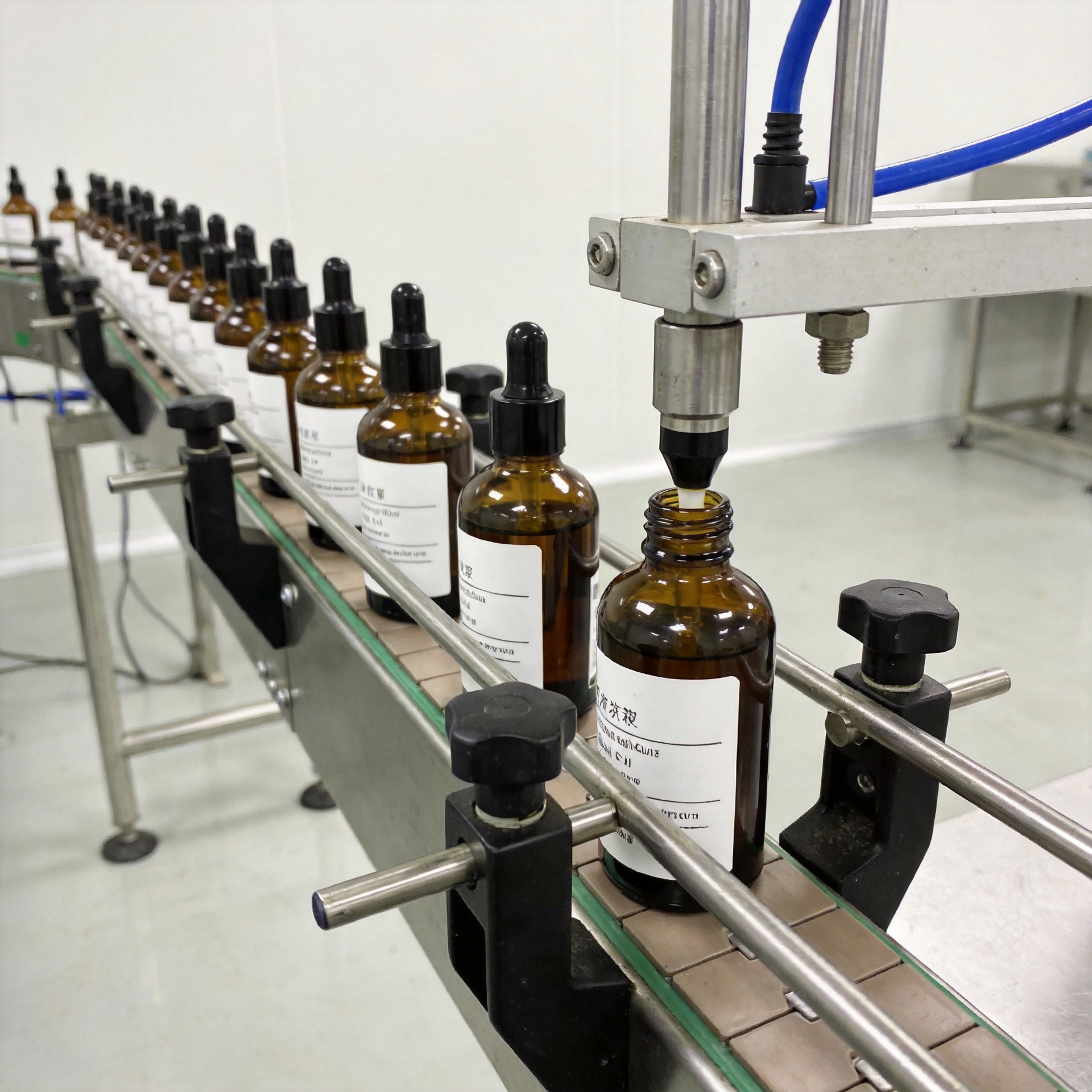
Once the formula is approved and packaging components have arrived, the production batch is scheduled. Batch size, production queue, and product format all affect timing here. Most manufacturers run a short test fill before the full production run to verify that the approved formula behaves consistently at scale. For spray-format products—such as delay sprays, facial mists, or functional body mists—pump mechanism compatibility needs to be confirmed at this stage before a full fill run begins.
Stage 7: Quality Control and Export Documentation (1–2 Weeks)
Finished goods are inspected before dispatch. This stage generates the batch records, Certificate of Analysis, and export documentation package required for customs clearance in the destination market. For US-bound shipments, CCIC certification and FDA-aligned cosmetic documentation support the import process. Gaps in documentation at this stage cause the most predictable delays at customs—not because the product itself is deficient, but because the paperwork does not meet what the receiving market requires.
Stage 8: International Shipping (1–3 Weeks)
Sea freight to the US or Europe typically runs two to four weeks. Air freight is faster but materially more expensive per unit. The OEM lead time calculation is not complete without this stage included. Brands that plan a launch date backward from their target launch without accounting for shipping time will consistently miss their window.
Key Factors That Affect OEM Lead Time
- Formula complexity: Custom herbal or multi-active formulations take longer to stabilize than standard base formulas. The more complex the ingredient interaction, the more time the stability phase requires.
- Packaging type: Custom packaging consistently adds time to the production cycle. Standard components remove the packaging procurement variable from the critical path.
- Brief quality: Incomplete or ambiguous formulation briefs are one of the most consistent causes of extended OEM lead time. Each sample iteration adds one to two weeks.
- Stability testing requirements: The testing window is not negotiable for most export markets. Build in at least six weeks for this phase when planning your schedule.
- Production queue at the manufacturer: Capacity availability at your contracted cosmetic contract manufacturer affects when your batch gets scheduled. This is a variable that early inquiry and confirmed deposit usually improve.
What This Means for Your Launch Timeline
For a custom OEM project—formula developed from brief, stability tested, packed in custom components, and shipped internationally—four to six months is the realistic planning window. Shorter timelines are possible, but they usually require trading off somewhere: stock packaging instead of custom, stock formula instead of fully bespoke development, or air freight instead of sea. Each tradeoff has a cost implication that should be evaluated explicitly rather than assumed.
If your target market is the US and your product is a new custom formula, plan for five to six months from confirmed brief to arrival, not three. If you are working with a stock formula and standard packaging through a private label path, four to six weeks post-order is more accurate.
Working with a cosmetic contract manufacturer that provides milestone-based communication throughout the production cycle—rather than reactive updates when problems surface—makes the OEM lead time more predictable. The brands that consistently hit their launch schedules are the ones who treated timeline planning as a shared process with their manufacturing partner from the first conversation, not an afterthought once production is underway.